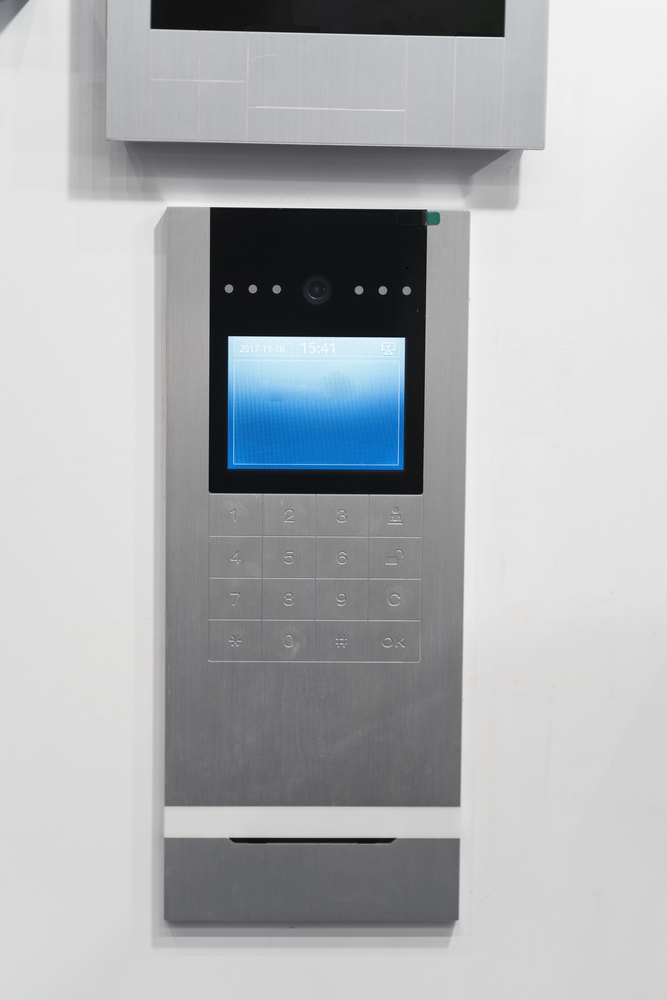
The traditional entrance is no longer what it was a decade ago. Access control in buildings has evolved from physical keys and wired intercoms to connected ecosystems where smart video intercoms, mobile apps, common area automation, and a fiber optic infrastructure coexist. For property managers and homeowner associations, understanding how these pieces fit together is crucial before approving any investment at the board meeting.
Access Control in Buildings: From Physical Keychains to Apps
Access control in a community regulates who enters, when, and through which route, and today there are several technologies that are often combined in a single building. Access control in communities regulates who can enter the building, when, and through which route, and there are four main technologies: video intercom, RFID card or key fob, mobile app, and license plate reader, so most communities need a combination of these technologies, not just one.
Regarding indicative costs, an IP video intercom with an app typically ranges from 1,500 to 6,000 euros and is the best option as a base system for any community, while an RFID control by card or key fob ranges between 800 and 2,500 euros, a figure that varies depending on the size of the building and the number of accesses to cover. The general trend in this area points towards more flexible management models: access control as a service is gaining traction because it allows remote management, automatic updates, and reduced operational costs, which in a community translates to virtual key fobs, temporary codes for visitors or suppliers, and access logs without relying on physical keys that get lost or duplicated.
If the community is considering taking this step, it is advisable to compare quotes from several specialized installers through a trusted professional directory before bringing the proposal to the board.
Smart Intercoms: The Digital Door of the Entrance
The video intercom remains the central element of access control, but its installation and use have been significantly simplified. Manufacturers like Comelit have focused on making the installer's job easier: their most revolutionary feature is the magical configuration through NFC technology, allowing the installer to program the monitors wirelessly, even without taking them out of the box, just by bringing their mobile close, which reduces time and costs in large installations. Other systems, like the BE SMART module, allow call forwarding to smartphones without complicated configurations even in existing two-wire installations.
This is especially relevant in older buildings, where it is not always necessary to change all the wiring: the IP video intercom works over Ethernet or WiFi network and allows remote opening from the mobile, video recording, integration with smart locks, and app control, being the most flexible system although also the one that requires the most infrastructure. For communities that do not want or cannot touch the street panel, there are also retrofit solutions: if you live in a community and cannot touch the entrance panel, an intercom-type device connects to the interior intercom and allows you to answer and open from the mobile without the rest of the neighbors noticing anything, a very useful intermediate way while deciding on a comprehensive renovation.
Automation in Common Areas: Beyond Security
Community automation is not limited to cameras and intercoms; its greatest impact is usually in the management of common areas. In a residential building, common area automation focuses on four areas: smart lighting in staircases, landings, garages, and common premises with presence detectors; access control with electronic intercom and video call to the mobile; climate control of common areas with scheduled hours; and garage management with presence lighting and automatic ventilation.
The potential savings is one of the arguments that most convinces at the homeowners' meeting: lighting in common areas usually represents between 30% and 50% of a community's electricity bill, and with presence detectors and natural light sensors, the real savings range between 40% and 70% of that consumption. At the level of general adoption, 39.1% of people aged 16 to 74 already use home automation devices or services, according to the National Statistics Institute, and in the case of buildings, the Matter standard has consolidated interoperability between brands and ecosystems, making it easier to integrate video intercom, lighting, and climate control under a single management system without relying on a single manufacturer.
Fiber Optics: The Invisible Infrastructure That Supports Everything
None of the above works without a well-dimensioned telecommunications network. Neither video surveillance nor smart access control work without an adequate telecommunications infrastructure, and that includes both the fiber optic that reaches the building and the internal wiring and WiFi coverage in common areas. Many home automation or IP video intercom projects get stuck precisely at this point: the community wants remote opening or cloud cameras, but the building does not have sufficient network in the entrance, garage, or rooftop to support it. Reviewing this aspect before bidding on any security system avoids surprises and cost overruns during installation.
How to Approach the Project from the Community
Before bringing a modernization proposal to the board, it is advisable to follow a logical order:
- Conduct a building diagnosis: existing wiring, network coverage, and current intercom status.
- Define priorities: is more security, more comfort, energy savings, or all three sought?
- Request comparable quotes from several installers specialized in communities, not just single-family homes.
- Consider hybrid solutions that take advantage of the current installation before proposing a complete renovation.
- Check the maintenance and after-sales support of the chosen system, an aspect often overlooked.
Taking this step does not have to be complicated if you have the right professionals. At ForConnect, you can request a quote for access control, smart intercoms, automation, or fiber optics, and compare proposals from verified specialists who already work with homeowner associations and property managers throughout Spain.