The energy bill and new efficiency requirements are changing the way buildings are heated and cooled in Spain. More and more property managers and owners are wondering what is more cost-effective, whether to maintain the gas boiler or switch to aerothermal, and how to manage air conditioning maintenance in the community without regulatory surprises. In this article, we review the keys to making informed decisions about efficient climate control and energy savings, both in single-family homes and in homeowners' communities.
Aerothermal vs Gas Boiler: Which to Choose in a Homeowners' Community?
The market trend is clear: aerothermal is gaining ground over traditional systems. In electrical installations by 2026, aerothermal replaces traditional boilers due to its high performance and compatibility with solar systems. The technical reason is simple to understand: a modern aerothermal heat pump has a seasonal performance (SCOP) of 3.5 to 4.5, delivering 3.5 - 4.5 kWh of heat for every electric kWh consumed, while the best condensing boiler does not exceed 95% efficiency. Therefore, IDAE recognizes it as renewable energy, which is not the case with natural gas.
Economically, the savings compared to gas can exceed €1,000 per year in a single-family home, although in an apartment within a community, the figure depends on the surface area, orientation, and insulation of the building. However, it is advisable to be realistic with the timelines: without aid, the investment is amortized in 6 - 12 years; applying the IRPF deduction and other incentives, the period drops to 5 - 8 years, with an equipment lifespan of 15 - 20 years. Additionally, by 2026 there is a favorable framework of aid and incentives that, depending on the autonomous community and the type of property, may include grants, tax bonuses, or deductions for energy efficiency improvements, so it is advisable to always check the current conditions before deciding.
The difference between single-family and apartment is important when evaluating the installation: the single-family home is an ideal scenario for aerothermal because there is plenty of space for the outdoor unit and no need to ask the homeowners' community for permission, while in an apartment block the available space, facade aesthetics, and community agreement are factors that can condition the project. If you are considering this transition for your community, in the ForConnect professional directory you can find specialized installers to analyze each specific case.
Heat Pump in the Home: Performance, Sizing, and Combination with Solar
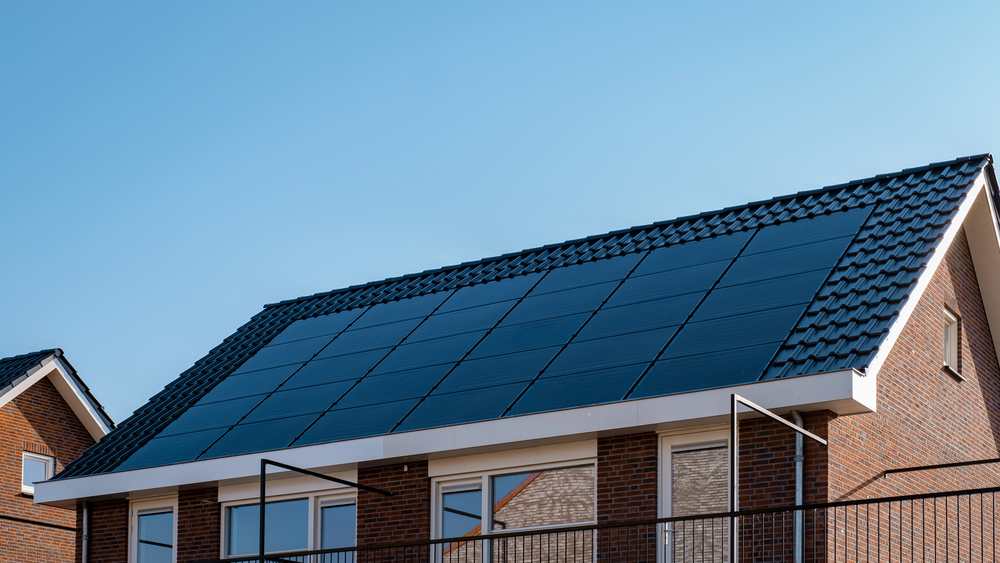
Beyond the aerothermal vs gas boiler debate, the market points to an increasing integration between heat pump and photovoltaic self-consumption. One of the most promising trends is the integration of hybrid systems that combine aerothermal with photovoltaic solar panels, as single-family homes lead the installation of aerothermal with solar, while apartments opt for latest-generation split inverter systems with intelligent control. This data is relevant for communities: in residential buildings, the most common solution remains the efficient individual split, while aerothermal with solar fits better in single-family homes or comprehensive rehabilitation projects.
Self-consumption data support this direction: in Spain, there are more than 9 GW of installed self-consumption, and the usual savings on the electricity bill range between 30% and 60%, with an indicative amortization of between 6 and 10 years when combining photovoltaic and aerothermal. For a home or building, correctly sizing the heat pump —power, type of emitters, and insulation— is as important as choosing the brand of the equipment, as poor sizing negates much of the promised savings.
Air Conditioning Maintenance in the Community: What the Regulations Require
Air conditioning maintenance in common areas or centralized installations is not just a matter of comfort, but a legal obligation. The Regulation of Thermal Installations in Buildings (RITE) establishes the regulations on air conditioning system maintenance and is published to increase the efficiency of thermal installations, emitting fewer pollutants and reducing the energy bill. For higher power installations, companies must conduct an energy efficiency inspection every 4 years for systems with a nominal thermal power greater than 70 kW.
The regulations are in the process of being updated. The deadline on the horizon is the year 2026: by then, existing buildings will be legally required to adapt their systems to new efficiency and renewable energy standards. However, the transition is not immediate for the entire installed stock: homes with air conditioning equipment installed before 2026 will not be required to replace them immediately; the obligation is activated when equipment replacement is due to end of useful life, irreparable failure, or installation reform. This directly affects the planning of replacements in communities with old equipment, as a serious failure may force the adoption of the new regulatory framework, including new generation refrigerants.
Therefore, it is crucial to work with authorized maintenance companies that are thoroughly familiar with the RITE regulations, both for periodic inspections and for timely planning of community equipment renewal. Neglected maintenance not only risks legal compliance but also spikes the entire community's electricity consumption.
Keys to Efficient Climate Control and Real Energy Savings
Beyond choosing aerothermal, heat pump, or maintaining the current system, there are management decisions that make a difference in the community's energy savings:
Review the sizing of the equipment before replacing it, avoiding oversizing out of excessive caution.
Schedule preventive maintenance of air conditioning and boilers before each season, not just when a failure arises.
Consider hybrid systems that combine aerothermal, photovoltaic solar, and intelligent zone control.
Plan in advance the replacement of equipment using less efficient refrigerants or fuels, taking advantage of renovation windows or failures to update the entire installation at once.
Compare quotes among several certified installers before signing any maintenance or installation contract.
Each community has different needs depending on the building's age, type of installation (individual or centralized), and available budget, so there is no single valid answer for all cases.
Take the Next Step Towards More Efficient Climate Control
Whether to compare aerothermal against gas boiler, plan your community's air conditioning maintenance, or simply understand what current regulations require, having specialized professionals makes the difference. At ForConnect, you can consult the climate control professionals directory to find trusted installers and maintainers, or request a quote for your home or homeowners' community quickly and without obligation.