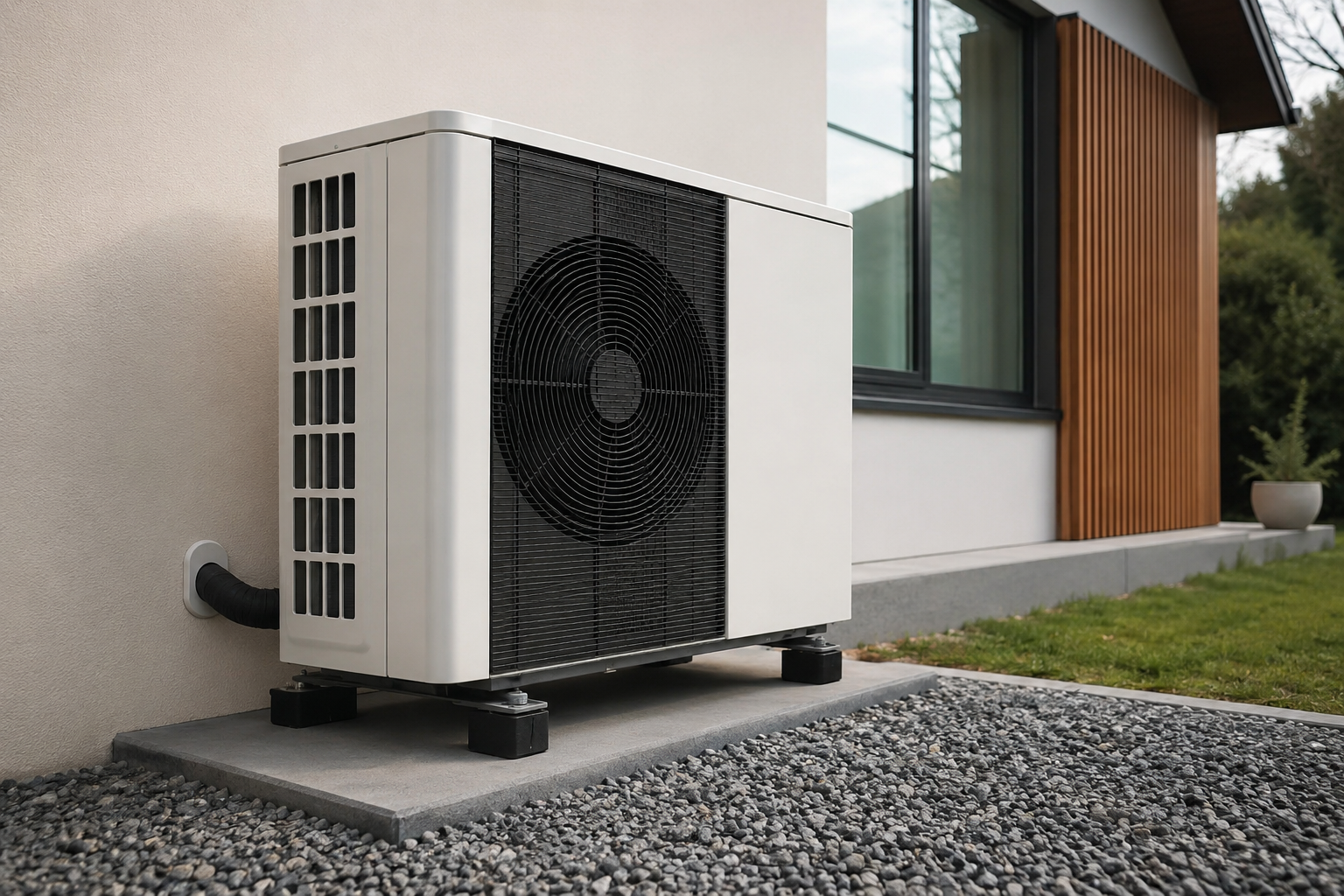
The question aerothermal vs gas boiler has become one of the most common decisions for homeowners and communities seeking efficient climate control to reduce energy bills. With the volatility of gas prices, the progressive rise in European requirements, and the technological improvement of heat pumps, more and more property managers and owners are considering the switch. In this article, we review what really differentiates both systems, what the regulations say, and how to avoid the most common mistakes when choosing a heat pump for home.
Aerothermal vs gas boiler: which system is more profitable?
Economic comparison is, for most homeowners, the decisive criterion. The latest analyses show a clear difference in favor of electrification: with a 95% efficiency condensing boiler and a natural gas price of approximately 0.08 €/kWh, the cost per thermal kWh is around 0.084 €, while with an aerothermal heat pump with SCOP 3.5 and electricity at 0.18 €/kWh, the cost drops to 0.051 €/kWh. In practice, this means that aerothermal produces the same heat at approximately 40% less cost under current price conditions. This advantage is not fixed: gas prices have shown high volatility in recent years, while the electricity consumed by aerothermal can benefit from time-of-use tariffs and self-generated photovoltaic power if there is an installation in the building.
In terms of technical efficiency, the difference is notable: a modern condensing boiler recovers the latent heat from combustion gases achieving an efficiency of 98-109% over the gas's PCI, compared to the 80-85% of an old standard boiler. But aerothermal plays in another league: a COP of 4 means it produces 4 kWh of heat for every electric kWh consumed, compared to the maximum of 1.09 kWh of heat for every gas kWh of the condensing boiler.
When is each option worthwhile?
There is no universal answer: it depends on the home, the existing installation, and the available budget.
Opt for aerothermal if: you seek maximum long-term savings, want heating and cooling with the same equipment, or your home uses butane, propane, or diesel. In homes with butane, propane, or diesel, aerothermal represents a huge saving and eliminates the dependence on fuel supplies, and it is also reversible: it heats in winter and cools in summer with the same equipment.
Maintain or renew the gas boiler if: your budget is limited or you live in an apartment without outdoor space. In apartments without a terrace, patio, or available facade, aerothermal may not be viable because it requires an outdoor unit. Additionally, in climatic zones where heating is needed only a few months a year, the operational savings of aerothermal may not justify the extra investment.
A common mistake when calculating savings is forgetting the heat emitters. Many installations fail because the equipment is good and the installer set it up correctly, but the client saves half of what was promised because no one checked the existing radiators before signing. Aerothermal systems perform better with underfloor heating or low-temperature radiators; with old high-temperature radiators, the actual savings may fall far short of expectations.
Will gas boilers be banned? What the regulations really say
Many alarming headlines circulate, but it's worth clarifying the situation. Gas boilers will not be banned in 2026: the European regulation (EPBD) has generated some confusion in its interpretation, and it is common to hear rumors about a supposed ban. Currently, there is no obligation to replace a gas boiler in homes in use: you can continue using it, repair it, or replace it when necessary.
Where the landscape does change is in new construction. The regulation establishes that no new building can incorporate thermal systems that use fossil fuels, so a home built from 2026 cannot install a gas boiler for heating or DHW. Consequently, the sector is oriented towards aerothermal heat pumps, urban heating networks, and high-efficiency electric systems combined with photovoltaics. If you decide to change your current boiler, however, the new one must be a condensing type, the standard required by current regulations (RITE and European efficiency regulations).
Grants and financing to make the leap
The initial cost of aerothermal remains the main barrier, but there are mechanisms that reduce the net investment. By replacing a fossil fuel boiler with a heat pump, the action generates Energy Savings Certificates under the MITECO catalog sheet, which for an individual usually range between €1,000 and €3,500 depending on the calculated savings and installed power. Added to this is the tax deduction: there are 20% and 40% deduction tranches in the IRPF for energy efficiency improvement works, for works paid until December 31, 2026. It is also worth reviewing municipal IBI bonuses, which vary according to each town hall.
Efficient climate control all year round: it's not just about the equipment
Choosing the heat and cold generation system is only part of the equation. A well-planned community air conditioning maintenance —filter review, cleaning of outdoor units, and refrigerant check— extends the equipment's lifespan, prevents breakdowns in the middle of summer, and maintains the performance announced by the manufacturer. The same goes for aerothermal: poor sizing or a poorly located outdoor unit can penalize the real COP compared to the catalog. Therefore, whether you opt to maintain gas, switch to a heat pump, or simply optimize the existing air conditioning, having certified installers makes the difference between paper savings and real bill savings.
If your community or home is considering changing the climate control system, the most practical thing is to compare quotes with professionals specialized in aerothermal, condensing boilers, and climate control. In the ForConnect professional directory, you can find trusted installers near you to assess your specific case.
Conclusion: the decision depends on your home, not trends
Aerothermal is gaining ground with solid savings data and a European regulation that clearly pushes towards electrification, but this does not mean that the gas boiler has become obsolete overnight, especially in existing homes with space limitations or old emitters. The key to real efficient climate control is to analyze consumption, the state of the installation, and the available budget before deciding. If you want to compare options and receive quotes tailored to your home or community, you can request a quote from ForConnect and let qualified professionals advise you without obligation.