When an elevator breaks down on a Friday afternoon or a leak floods the garage, the question that arises in the community is always the same: could it have been avoided? In most cases, yes. A well-designed preventive maintenance plan does not eliminate risk entirely, but it significantly reduces the frequency and cost of breakdowns in community facilities. The challenge for administrators and presidents is not understanding why it's important—everyone already knows that—but how to organize it realistically, installation by installation, without it becoming a list of good intentions that no one reviews.
What a Preventive Maintenance Plan for Installation Really Is
Preventive maintenance is the set of scheduled tasks to keep the building and its installations in safe and efficient conditions, aiming to prevent failures and unexpected costs through inspections, cleanings, adjustments, and replacements before a breakdown occurs. The difference with corrective maintenance—which is activated when something has already happened—is precisely this: act before, not after. The key is that good preventive maintenance drastically reduces breakdowns, just like with a car: if you get timely check-ups, it's less likely to leave anyone stranded.
How to Build the Maintenance Schedule Step by Step
There is no universal template valid for any building, but there is a common methodology. A building maintenance plan must identify which elements are reviewed, how often, who is responsible for each action, and how interventions are documented, with the aim of anticipating problems and optimizing available resources. In practice, this translates into three steps:
Initial Diagnosis: gather the community and analyze the condition of each area—garage, entrance, gardens, roof, elevators—to detect real needs.
Prioritization: not all tasks are equally urgent; some can be done monthly, others quarterly, or only once a year, and it is advisable to classify them to optimize time and budget.
Assignment of Responsibilities: put in writing what the maintenance company does, what falls to the administrator, and what is in the hands of the concierge or the board.
Plumbing and Water Networks
A preventive plan should consider the long-term preservation of the property, including plumbing, heating, electricity, and maintenance of common areas. In plumbing, this involves periodically checking pressure groups, valves, inspection chambers, and connection points before a worn joint ends up causing a leak that affects several floors.
Electricity and Main Panels
The review of main panels, circuit breakers, and meter panels should be part of the annual schedule, not just mandatory inspections. Detecting a loose contact or a component starting to overheat usually costs much less than replacing a complete panel after a short circuit.
Elevators
Spain has more than 870,000 elevators in service, the second-largest fleet in Europe, and it is one of the elements that most impacts daily community life and generates the most conflicts when it fails. Preventive maintenance covers mandatory periodic visits, component lubrication, safety device checks, and maintenance book updates. Additionally, it is increasingly common for companies to adjust the frequency according to actual use: not all machines need the same care, so personalized plans are recommended according to the use and age of each device.
HVAC
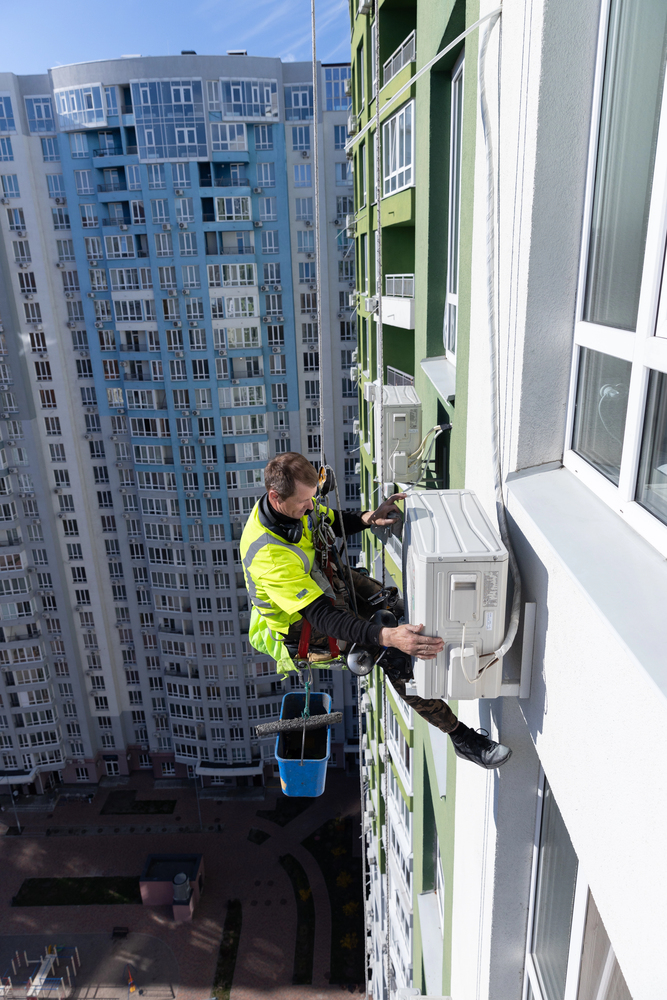
In centralized HVAC systems, the schedule should include filter cleaning, compressor inspection, and performance checks before peak usage seasons, preventing the first hot or cold day from coinciding with the first breakdown of the year.
Basic or All-Risk Contract: The Decision That Most Impacts the Budget
When negotiating the maintenance contract, especially for elevators, it is important to know what each modality covers. A basic contract covers mandatory preventive inspections and call attention, but parts and repairs are billed separately, while an all-risk contract includes these parts, repair labor, and the rescue of people within the quota. The usual problem arises when no one has read the fine print: the conflict arises when the base contract excludes commonly worn parts, so before signing, it is advisable to demand an exact breakdown of what is included and what has additional cost. Comparing various offers through a directory of professionals specialized in community installations helps detect these differences before committing to several years of contract.
From Spreadsheet to a Register That Is Actually Consulted
A maintenance schedule only works if it is updated and consulted. A complex system is not necessary: a register accessible to the board with review dates, responsible company, and detected incidents is enough. This history is precisely what allows justifying decisions to owners and anticipating replacements before they become an urgent and expensive breakdown.
The Result: Fewer Breakdowns, Fewer Surprises in Accounts
Well-planned maintenance reduces failures and, above all, avoids major expenses from unforeseen repairs. In the medium term, this predictability translates into more stable community budgets and fewer emergency assessments. If your community still manages maintenance reactively, it's a good time to organize the schedule installation by installation and request a quote from verified professionals that fit the real needs of your building.