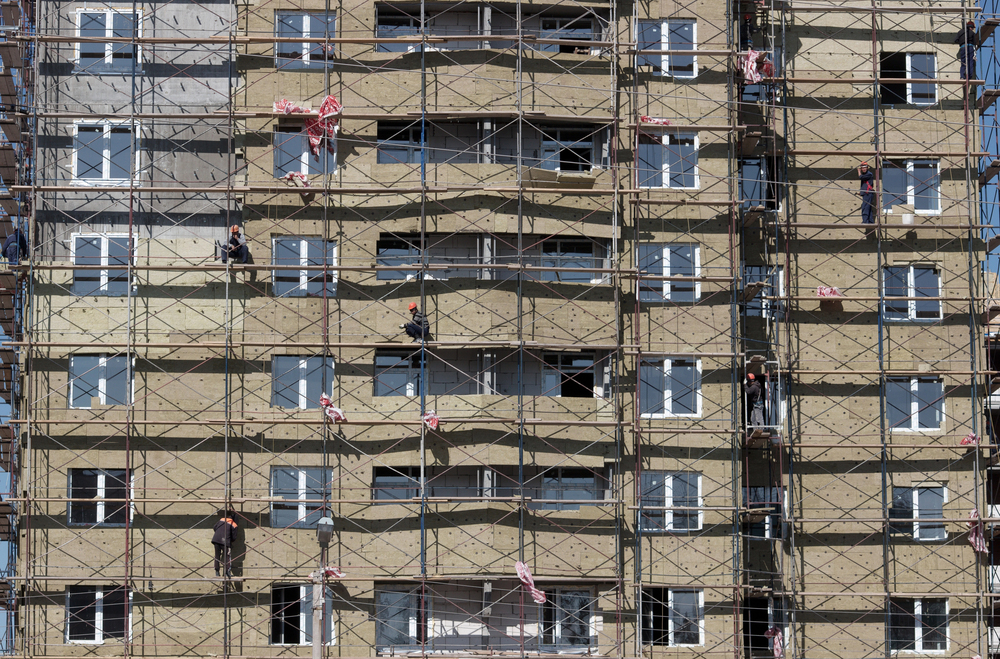
If you are a property manager or community president, 2026 is a key year: the execution deadlines for the building rehabilitation grants 2026 linked to European funds are reaching their final stretch, while other tax-saving avenues, such as the IRPF deduction or municipal bonuses, remain active with new deadlines. Knowing what remains open, what has closed, and what requirements must be met makes the difference between taking advantage of these aids or letting them slip away.
Next Generation Funds for Communities: The 2026 Countdown
The Recovery, Transformation, and Resilience Plan, funded by the Next Generation European funds, continues to be the main source of Next Generation community aids for energy rehabilitation of buildings. However, the schedule is tight: the Spanish Association of Lightweight Façades and Windows Manufacturers (Asefave) warns that the deadline to execute the European aids ends on June 30, 2026, with no possibility of extension, for the energy rehabilitation of buildings. In Catalonia, however, the Generalitat has introduced important nuances: given the proximity of the June 30, 2026 deadline for the completion of aided works, an extension has been enabled for programs 1 (neighborhoods) and 3 (buildings) of the Next Generation funds. However, there is a documentary requirement that does not allow delays: it is essential that files with already completed actions provide the final Energy Efficiency Certificate through the Procedures portal before June 30, 2026. Not all programs are so fortunate: Program 4, for individual housing, has no extension, so its regional calls are closed, while actions at the building or neighborhood level can benefit from this additional margin in Catalonia. For communities that have not yet started the file, the recommendation is clear: contact a technician as soon as possible and request a quote from professionals experienced in these programs, something you can manage through the ForConnect professional directory.
Catalonia Rehabilitation Aids: Who Manages What
In the Catalan sphere, the Catalonia rehabilitation aids are distributed among three entities depending on the building's location. Depending on where the building is, the aid recipient must go to one entity or another: in Barcelona city to the Consorci de l'Habitatge de Barcelona; in the metropolitan area, excluding Barcelona, to the Consorci Metropolità de l'Habitatge; and in the rest of Catalonia, to the Agència de l'Habitatge de Catalunya. The Agència itself maintains an open call: it maintains an open call for grants aimed at promoting the rehabilitation of the Catalan residential park through actions that allow improving the energy efficiency of buildings and homes, with three differentiated programs: building-level rehabilitation actions, energy efficiency improvement actions in homes, and aid for the preparation of the existing building book, with an allocation for the last call amounting to 57,475,365 euros distributed among the different aid programs. For a community of owners, this means that it is advisable to first identify which entity the file corresponds to according to the municipality and review the technical requirements, such as the minimum percentage of energy consumption reduction, before starting the work.
IRPF Deduction for Energy Efficiency Works: Renewed Deadlines
Beyond direct grants, the IRPF deduction for energy efficiency works remains one of the most used tax-saving avenues by owners and communities. The Government has extended these incentives through Royal Decree-law 7/2026: IRPF deductions are extended until the end of 2026 for actions carried out in homes and until the end of 2027 in complete residential buildings, after its validation in Congress. In practice, there are three segments depending on the type of work: a 20% deduction for those who achieve a minimum 7% reduction in heating and cooling demand of the main residence, accredited with an energy certificate, with a maximum annual base of 5,000 euros; a 40% deduction when the work reduces at least 30% of non-renewable primary energy consumption or allows reaching energy rating A or B, with a maximum annual base of 7,500 euros; and the most relevant for communities, 60%, designed for owners of homes in residential buildings where energy rehabilitation works are carried out until December 31, 2027. In all cases, the energy certificate after the work is the key piece that cannot be missing in the file; without it, the Tax Agency does not admit the deduction.
IBI and ICIO Bonuses: The Municipal Piece of the Puzzle
The third front of aids depends on each city council. Many city councils reduce the IBI or ICIO when the work raises the energy rating, although this is consulted in each municipality and varies greatly from one to another. In the case of accessibility works, the fiscal margin can be even greater: where there is real money is in the ICIO of accessibility works, which can reach 90% in some municipalities, according to their fiscal ordinance. For communities that combine energy rehabilitation with accessibility improvements, it is worth reviewing the local fiscal ordinance before starting the works, as some bonuses must be requested expressly and, sometimes, before obtaining the license.
How to Organize in the Community to Not Miss These Aids
With so many open avenues and different deadlines, the property manager plays a central role in ensuring the community does not miss opportunities. Some practical recommendations:
- Request the initial energy efficiency certificate as soon as possible, a prior and essential step for any Next Generation program or IRPF deduction.
- Verify in the owners' meeting which entity is responsible for processing the aid (regional, metropolitan consortium, or municipal call) before contracting the work.
- Keep all documentation: itemized budgets, invoices with traceable payment methods, and energy certificates before and after the work.
- Check if the building's city council contemplates IBI or ICIO bonuses for energy efficiency or accessibility works.
- Count on professionals accustomed to processing these files, as an error in the technical documentation can mean the loss of the grant.
At ForConnect, we help communities and managers find professionals specialized in rehabilitation, energy efficiency, and accessibility who know firsthand the requirements of these calls. If your community is considering such an action, you can request a quote without obligation and start moving the file while the aids remain in force. The 2026 and 2027 deadlines are generous, but not infinite: the sooner the process is started, the more room the community will have to justify the work and access the corresponding grant.