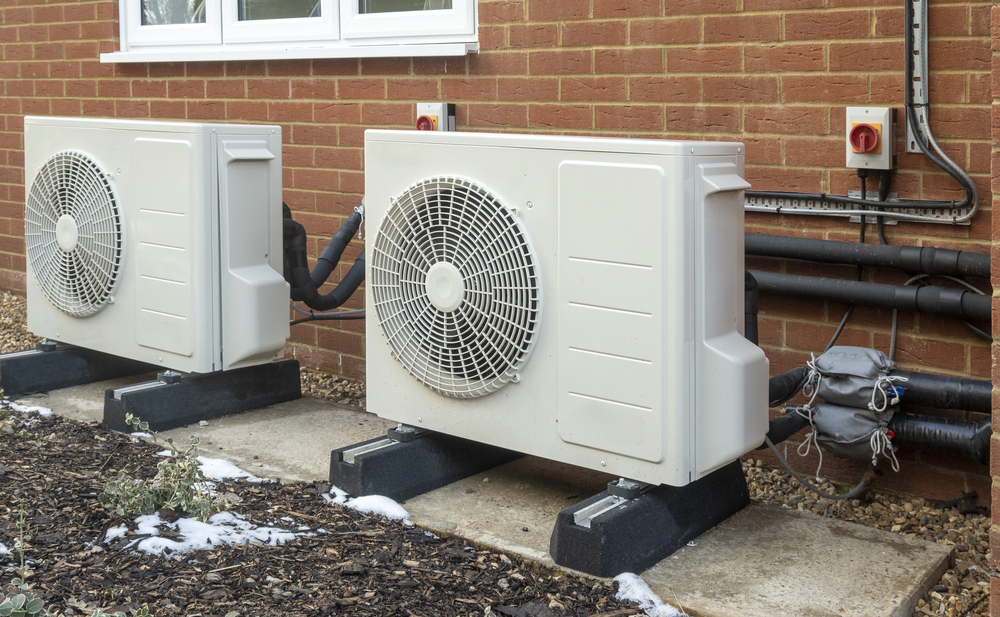
Efficient climate control has become a priority for property managers, community presidents, and homeowners looking to reduce bills and anticipate regulatory changes affecting boilers and heating systems. Among aerothermal energy, heat pumps, and the need for good air conditioning maintenance, choosing the right strategy can make a significant difference in a building's energy savings. In this article, we review the available options, their real profitability, and the current aids in Catalonia to make an informed decision.
Aerothermal vs Gas Boiler: What to Choose in 2026?
The most frequently asked question among homeowners needing to renew their heating system is whether it's worth replacing a gas boiler with an aerothermal system. Aerothermal energy consumes 50-70% less energy than a gas boiler to produce the same amount of heat. This is because a gas condensing boiler, one of the most efficient, has an efficiency of 107%, while an aerothermal heat pump has an efficiency of between 300% and 500% (COP 3 to 5).
Economically speaking, in a well-insulated 120 m² home, the annual savings can range from 400 to 900 euros compared to an efficient gas boiler, and much more if the boiler is old. The initial investment, however, remains higher: a high-end condensing boiler is installed for 2,500-4,500€, compared to 8,000-15,000€ for aerothermal. With these numbers, aerothermal pays off in 7-10 years without aids and in 5-7 years with subsidies and energy savings certificates (CAE).
The scenario changes even more in homes that still rely on diesel. If starting from a diesel boiler, aerothermal is clearly more profitable: annual savings exceed 1,400 € and the payback can be 2-3 years with subsidies.
Heat Pump in the Home: Beyond Bill Savings
Talking about heat pumps for homes is not just about cheaper heating. One of the arguments weighing heavily in the decision of many communities is the reversibility of the equipment: aerothermal is reversible, heating in winter and cooling in summer with the same equipment, so if you currently have a boiler plus air conditioning, aerothermal replaces both. This simplifies the maintenance of community facilities and reduces the number of units to inspect.
Moreover, the European regulatory context pushes in this direction. The European Union has set the end of fossil fuel boilers for 2029, subsidies are historically generous, and the heating cost with aerothermal is lower than gas in most scenarios. In fact, in Spain since January 2025, European regulations no longer allow subsidies for boilers that run exclusively on fossil fuels, which includes conventional natural gas boilers.
Aids in Catalonia and Barcelona for Efficient Climate Control
For communities and homeowners considering making the leap, the aid map remains relevant when calculating profitability. In Catalonia, aids can reach up to 40% of the cost, with a maximum of 3,000 € per home, and in the city of Barcelona, they can reach up to 6,000 € per home. These lines are managed by ICAEN (Institut Català d'Energia) and the Agència de l'Habitatge de Catalunya.
At the fiscal level, the IRPF deduction remains one of the most used incentives. If the installation of aerothermal reduces the primary energy consumption of the home by at least 30%, 40% of the investment can be deducted; and if the installation is carried out in the context of an energy rehabilitation of a complete building (homeowner communities), the deduction can reach 60%. It's advisable to review the deadlines carefully, as in calls like that of the Consorci de l'Habitatge de Barcelona the deadline extends until June 2026 and an energy certificate is required before and after the works.
For a community considering undertaking this type of action, having professionals who are well-versed in aid processing and current regulations makes the difference between an agile project and one full of delays. In the ForConnect professional directory, you can find installers specialized in efficient climate control with experience in homeowner communities.
Maintenance, the Piece that Sustains Savings
Installing aerothermal or an efficient heat pump is just the first step. Real energy savings also depend on the equipment continuing to operate with the expected performance over the years. A poorly maintained system progressively loses efficiency, resulting in higher consumption and slower payback of the initial investment. Therefore, any efficient climate control plan in a community should be accompanied by regular inspections that check the condition of the filters, refrigerant charge, and operation of outdoor units, whether they are traditional air conditioning units or reversible heat pumps.
How to Make the Move in Your Community
Before deciding on one system or another, it's advisable to consider several factors together:
- The current fuel type (natural gas, diesel, or electric) and its real cost on the latest bill.
- The state of the building's insulation, which determines how much can be saved with any system.
- The current aids and tax deductions at the time of executing the work.
- If there is the possibility of combining the new system with solar panels to maximize savings.
Each community has different needs, so there is no one-size-fits-all solution for all buildings. The most recommended approach is to request a personalized technical assessment before making a decision that affects the entire homeowner community. From ForConnect, you can request a quote from verified professionals to analyze which efficient climate control option best suits your building, calculate the expected energy savings, and accompany you throughout the installation and maintenance process.