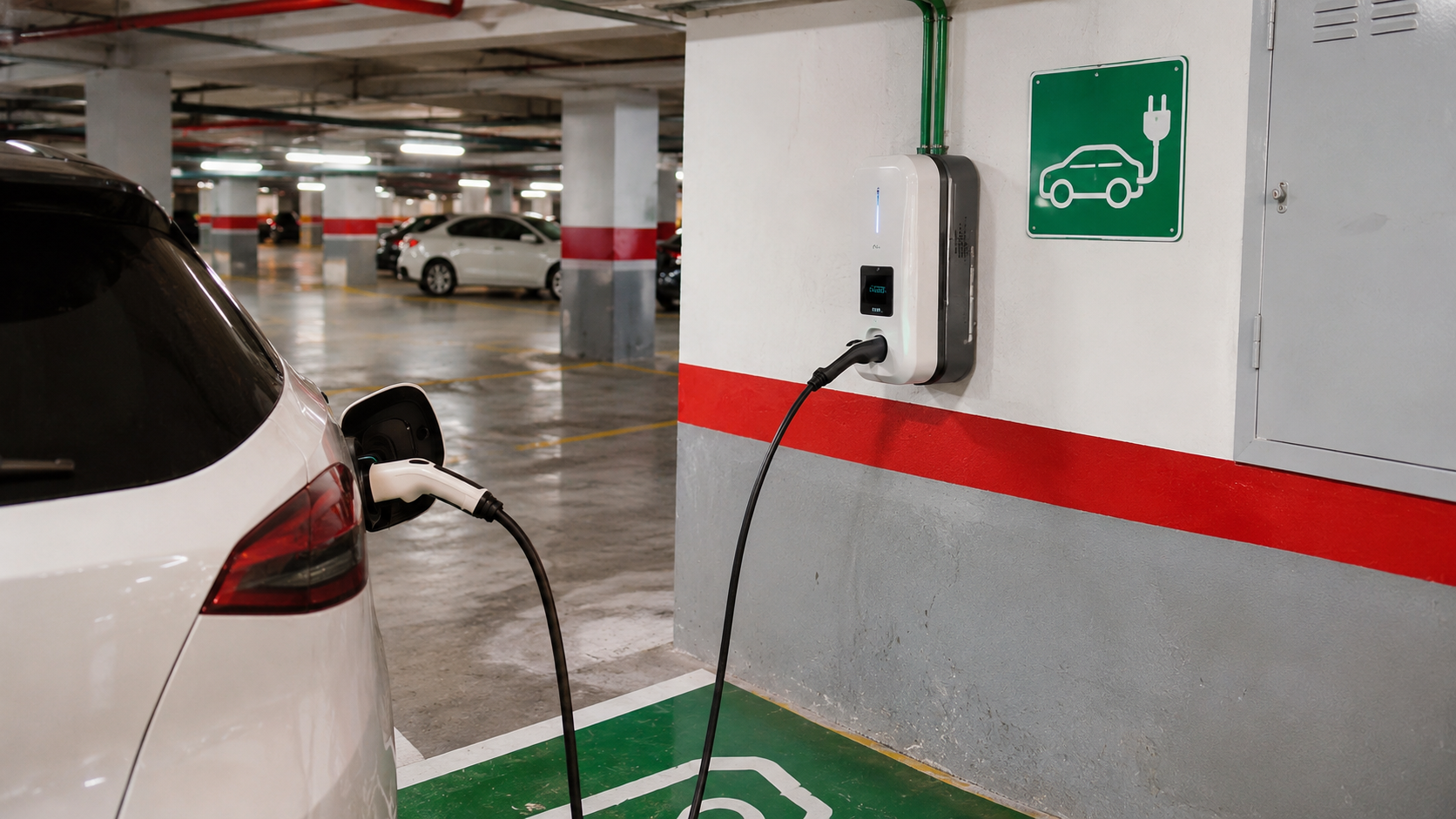
Sustainability is no longer a distant goal for residential buildings: it is a sum of everyday decisions. Installing electric car charging points in the community garage, timely detecting a water leak, or improving waste management are pieces of the same puzzle. In this article, we focus on electric mobility, as it is the area where most doubts arise among property managers and owners, and we also review how technology is changing leak detection in buildings.
What the regulations say about installing charging points in the community garage
The most common question in homeowners' meetings is whether a neighbor needs authorization to electrify their parking space. The answer lies in the Horizontal Property Law. The reference regulation is Article 17.5 of the Horizontal Property Law, which grants any owner the right to install a charging point in their parking space without the need for prior agreement from the board. In practice, this means that the community of neighbors cannot prohibit the installation itself, as long as the technical and economic requirements are met.
However, the owner cannot act independently: to install a private use charging point, you only need to make a prior written communication to the community president or administrator. This informative procedure allows the property manager to keep an orderly record of the installations and anticipate if the sum of several individual points begins to strain the available power in the building.
Regarding costs, the rule is clear: all costs are borne by the owner who installs: electrical study, certification, individual meter, wallbox installation, additional meters if necessary. The community does not participate in the cost unless a collective installation voted in the board is opted for. This second option, shared community charging, is gaining followers in buildings where several neighbors want to electrify at the same time, and it is more efficient to plan a common infrastructure than several successive individual installations.
Technical requirements and steps for a legal installation
In addition to the Horizontal Property Law, all installations must comply with electrical regulations. Both the installation and the charging device must comply with the ITC BT 52 regulation, which governs the technical aspects of systems for charging electric vehicles. In practical terms, this translates into several steps that administrators and owners should keep in mind:
- Prior written communication to the president or administrator, detailing the parking space and type of installation.
- Hiring an authorized electrical installer to prepare the technical report and apply the protections required by ITC-BT-52.
- Obtaining the electrical installation certificate (CIE), a document that legalizes the charging point.
- In Catalonia, no municipal license is required, although it is mandatory to submit the electrical bulletin to the Generalitat to legalize the installation.
Current subsidies and deductions
The economic aspect has also evolved. The MOVES III Plan remains in force for the installation of charging infrastructure, and for individuals in community settings, the subsidy covers up to 70% of the cost, with a cap of €800 per individual point. Additionally, there is a significant tax advantage: the 15% IRPF deduction for installing a charging point has been extended until December 31, 2026, as confirmed by the Tax Agency. It is advisable for each owner to check the exact conditions before starting the work, as the requirements for each call may vary.
If your community needs a trusted electrical installer who knows the ITC-BT-52 and manages the documentation correctly, you can find one in the ForConnect professional directory.
Water leak detection: the other side of sustainability in the building
While electric mobility grabs headlines, water management remains a silent source of overcosts for communities. An undetected leak in time can skyrocket the bill and cause structural damage. This is where technology comes in: IoT sensors can identify leaks and anomalies in water distribution networks, allowing action before the problem is visible to the naked eye.
The technical principle is relatively easy for a homeowners' board to understand: by constantly monitoring water flow and pressure, IoT systems can detect sudden deviations or abnormal consumption indicating a possible leak, and send instant alerts, allowing quick action to mitigate damage and avoid greater losses. In buildings with old installations or hard-to-access areas (light wells, downspouts, meter rooms), these systems reduce the reliance on periodic visual inspection and help the property manager prioritize truly urgent repairs.
Waste management: the third pillar not to be forgotten
Water savings and electric mobility often dominate the sustainability conversation, but proper waste management in common areas is also part of the equation. Correctly separating containers, facilitating the recycling of batteries or used oils in the building itself, and keeping collection areas tidy are simple measures that improve coexistence and reduce cleaning incidents and bad odors, especially in communities with commercial premises or shared garages.
How to take the next step in your community
Sustainability in the building progresses better when several fronts are coordinated at once: orderly electrifying the garage, installing sensors that detect leaks before they become disasters, and maintaining efficient waste management. In any of these cases, having specialized professionals makes the difference between a problematic installation and one that is resolved without friction among neighbors.
If your community is considering installing charging points, reviewing the plumbing network with leak sensors, or improving any aspect of the building's sustainability, at ForConnect you can request a quote from verified professionals who already know the applicable regulations and work with property managers throughout Spain.