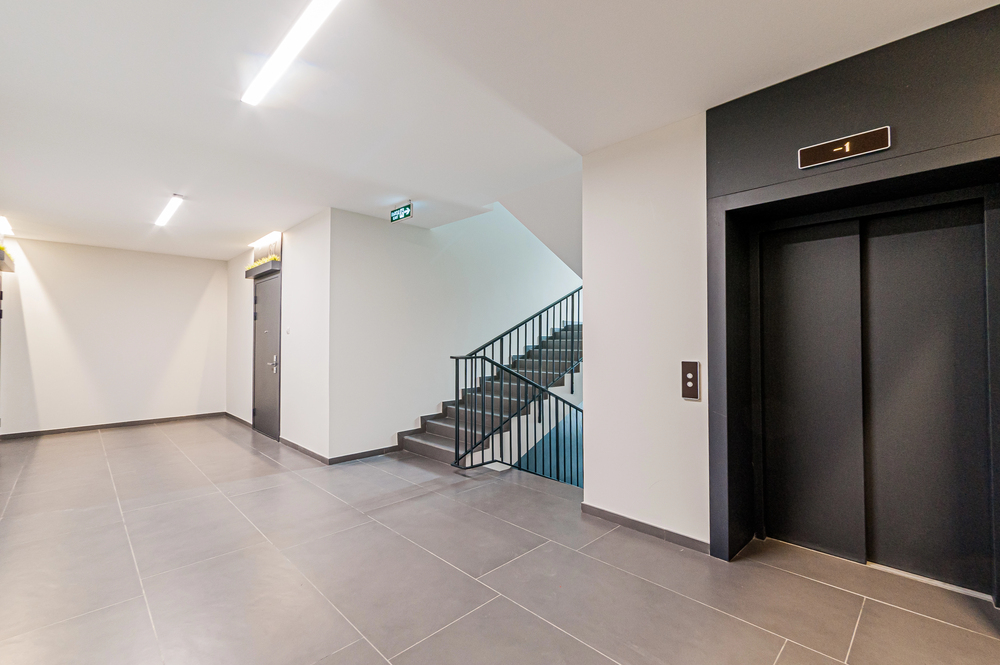
When an elevator starts experiencing frequent breakdowns, makes strange noises, or takes longer than usual to reach each floor, the same question often arises in the community: is it worth continuing to repair it, or is it time to renew it?
The answer doesn't always involve installing a new elevator. In many buildings, modernizing the community elevator may be sufficient to improve its safety, comfort, and operation without having to replace the entire installation.
However, before making a decision, it's advisable to know the actual condition of the equipment, regulatory requirements, and the building's technical possibilities.
When is it advisable to modernize a community elevator?
An elevator can continue to operate for many years if it receives proper maintenance. However, over time, some components wear out, technology becomes outdated, and repairs may start to become more frequent.
There are several signs indicating that it might be a good time to consider modernization.
Increasingly frequent breakdowns
When a community has to repeatedly call the technical service, it's advisable to study what's happening.
A single breakdown doesn't necessarily justify a major overhaul, but if problems repeatedly affect the motor, doors, or control system, it might be more interesting to replace certain components than to continue assuming repairs.
Difficulty finding replacement parts
Some old elevators incorporate components that are no longer manufactured or are difficult to obtain.
This situation can prolong repairs and increase the time during which residents are left without an elevator.
Modernizing obsolete elements can facilitate future maintenance and reduce dependency on hard-to-find parts.
Comfort and accessibility issues
Sudden stops, level differences between the cabin and the landing, or malfunctioning doors can hinder elevator use.
These situations are especially important in buildings where elderly or mobility-impaired people live.
Depending on the installation's characteristics, improvements in stopping precision, doors, controls, or cabin access can be considered.
What is the difference between modernizing and replacing an elevator?
Although often used interchangeably, modernizing and replacing an elevator are different interventions.
Modernizing an elevator involves renewing certain components of the existing installation to improve performance, safety, or reliability.
For example, action can be taken on the control panel, door system, traction machine, or cabin finishes, as long as it's technically feasible.
On the other hand, replacing an elevator involves renewing the entire installation or a substantial part of its elements, according to the technical project.
Replacement may be more appropriate when the equipment shows widespread deterioration, when repairs are no longer viable, or when a configuration is needed that the existing elevator cannot offer.
The decision should be based on a technical assessment, not solely on the age of the device.
What does the current regulation say about old elevators?
Regulation is one of the aspects communities must keep in mind before approving an intervention.
The Royal Decree 355/2024, which regulates the Complementary Technical Instruction ITC AEM 1, came into force on July 1, 2024, and establishes maintenance, inspection, and safety improvement requirements for existing elevators.
This regulation, later modified, incorporates measures to increase the safety of old installations. Among other issues, it includes actions related to stopping precision, automatic door protection, and certain safety devices.
It doesn't mean that all communities must immediately replace their elevators. The required actions and deadlines depend on each equipment's characteristics and the scenarios outlined in the regulation.
For this reason, it's important for the maintenance company to identify which adaptations correspond to each installation and for the community to know the obligations before planning the budget.
How often should an elevator be inspected?
In Catalonia, mandatory periodic inspections have the following minimum frequencies:
Every two years in industrial buildings and places of public attendance.
Every four years in buildings with more than twenty dwellings or more than four serviced floors.
Every six years in elevators not covered by the previous scenarios.
These inspections are carried out by control bodies and are different from the maintenance reviews performed by the maintenance company.
The community must keep the corresponding documentation and manage the correction of detected defects within the applicable deadlines.
What improvements can be made without changing the entire elevator?
A well-planned modernization can act on different parts of the installation.
One common intervention is the renewal of the control panel, which controls the elevator's operation. Updating it can improve maneuver management and facilitate incident diagnosis.
Components of the traction system can also be replaced, or movement regulation solutions can be incorporated when compatible with the existing equipment.
The doors are another important point. Their condition directly affects safety, comfort, and service availability.
Finally, there are improvements related to the cabin interior: lighting, buttons, indicators, coverings, and other elements that can facilitate daily use.
However, it should be remembered that not all modifications are possible in any elevator. Shaft dimensions, machinery type, and the building's structural conditions can limit options.
How to know if the investment is worth it?
Before presenting a proposal to the homeowners' association, the property manager should have a clear assessment of the elevator's condition.
It's not enough to compare the cost of a repair with that of a new piece of equipment. Maintenance expenses, accumulated breakdowns, spare part availability, and expected lifespan after the intervention should also be considered.
For example, if an installation generally operates correctly but has recurring problems with the control panel, it might make sense to consider a partial modernization.
Conversely, if several systems are deteriorated, there are significant accessibility limitations, and repairs are constant, a more complete replacement might be more reasonable in the long term.
It's advisable to request a detailed budget specifying the components to be replaced, included regulatory adaptations, expected work duration, and guarantees.
The vision of Ascensors Ramase: adapting the solution to each building
Not all buildings have the same needs, and this is especially evident when it comes to renovating old elevators.
Ascensors Ramase, a company based in Sant Joan Despí with a track record in the elevator sector since 1984, offers maintenance, installation, rehabilitation, and modernization services for elevators in Catalonia.
Among its specialties are the replacement of old components, cabin renovation, and adapting installations to the characteristics of each project.
According to its website, the company plans modernizations with the aim of limiting elevator downtime and improving safety and comfort.
It also offers solutions for residential buildings and accessibility equipment, such as platforms and stairlifts.
This variety of services allows for studying different alternatives based on available space, user needs, and existing installation characteristics.
What should a community review before approving the renovation?
A modernization can affect the daily operation of the entire building. Therefore, it's important for the community to have the necessary information before making a decision.
The first step is to request a technical diagnosis that identifies installation problems and differentiates mandatory actions from recommended improvements.
It's also necessary to check if the project requires administrative procedures, a specific inspection, or additional documentation.
Another aspect often overlooked is the time the elevator will be out of service. In communities with mobility-impaired individuals, this issue can influence work planning.
Finally, it's advisable to evaluate different alternatives with a long-term perspective. The initially cheapest proposal isn't always the one that offers the most favorable overall cost.
Ascensors Ramase and ForConnect: specialists for homeowners' associations
The modernization of an elevator is a decision that combines technical, economic, and safety criteria.
Therefore, having specialized companies is important both for identifying real needs and for planning an appropriate intervention.
Ascensors Ramase is part of the professional network of ForConnect, the platform that connects property managers, homeowners' associations, and individuals with specialized companies.
If your community needs to modernize an elevator, renew components, or consider a replacement, at ForConnect you can find industry professionals and request advice or a quote.