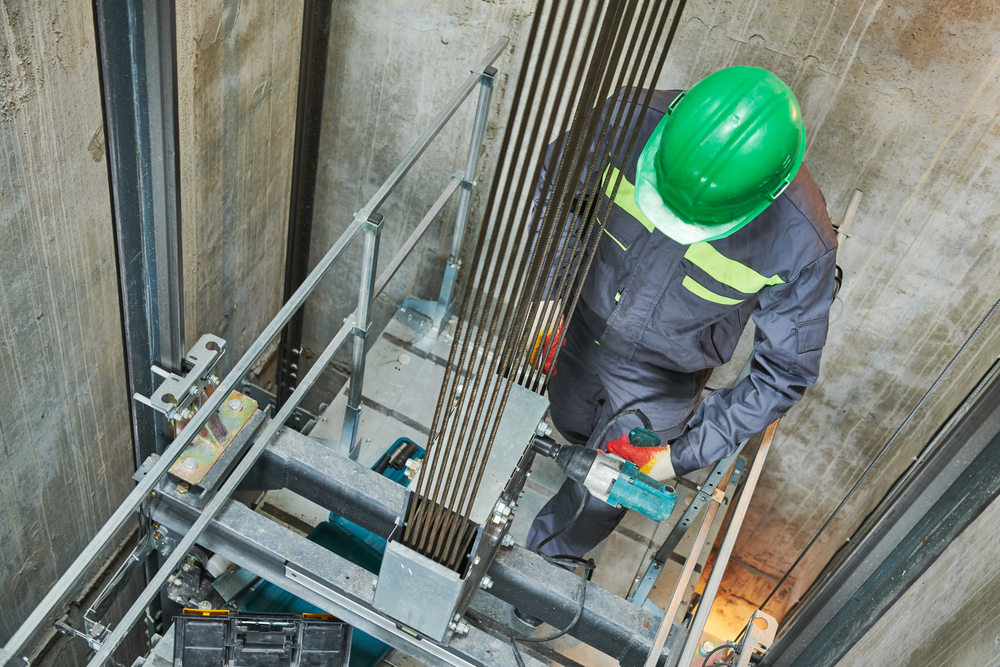
When an elevator starts experiencing frequent breakdowns, makes unusual noises, or requires increasingly expensive repairs, an inevitable question arises: is it worth continuing to repair it, or is it better to modernize it?
For many communities of owners, especially in old buildings in Barcelona and Catalonia, modernizing an old elevator can be a way to improve safety, reduce incidents, and adapt the installation to the current needs of the residents.
However, it's not always necessary to replace the entire elevator. In many cases, a partial modernization allows updating the most important components and extending the installation's useful life.
When is it worth modernizing an old elevator?
The age of an elevator is not, by itself, a sufficient reason to replace it. A long-serving unit can continue to provide good service if it has received proper maintenance and meets applicable safety requirements.
The problem arises when repairs become recurrent, components become obsolete, or the operation no longer meets the building's needs.
There are several signs that may indicate it's worth considering a modernization.
Increasingly frequent breakdowns
When an elevator stops repeatedly, the community not only incurs repair expenses. It also suffers interruptions of an essential service, especially for elderly or mobility-impaired individuals.
Analyzing the breakdown history helps identify whether these are isolated issues or recurring failures that justify a more significant intervention.
Difficulty finding spare parts
Some old elevators include components that are no longer manufactured or are difficult to obtain.
This situation can prolong repairs and increase their cost. Updating certain systems can facilitate subsequent maintenance and reduce reliance on obsolete parts.
Safety and accessibility issues
Doors that do not function correctly, level differences between the cabin and the landing, or outdated communication systems are aspects that require technical evaluation.
A modernization can incorporate improvements that facilitate cabin entry and exit and enhance user safety.
What can be modernized without changing the entire elevator?
One of the most common misconceptions is thinking that modernizing an elevator means completely replacing the installation.
In reality, partial modernization allows renewing specific components as long as the overall condition of the equipment, technical compatibility, and regulations permit.
Among the most common actions are:
Control panel: updating the system that controls movements, stops, and the elevator's operation.
Automatic doors: improving safety and facilitating cabin access.
Motor and traction system: replacing old equipment with more efficient alternatives when technically viable.
Safety systems: incorporating devices adapted to applicable requirements.
Lighting and cabin: renewing interior elements to improve comfort, visibility, and accessibility.
The decision should be based on an inspection of the elevator's actual condition. It makes no sense to replace components that function correctly if the community's needs can be addressed with a more limited intervention.
What does the elevator regulation require in 2026?
Regulation is one of the factors communities must consider before deciding on any action.
Royal Decree 355/2024, which came into force on July 1, 2024, approved the Complementary Technical Instruction ITC AEM 1 "Elevators."
This regulation establishes the conditions for maintenance, inspection, and modification of elevators, as well as certain measures to increase the safety of existing installations.
Among the issues it regulates are stopping accuracy, protection against certain cabin movements, communication systems, and other safety elements.
This does not mean that all communities must immediately replace their old elevators. The required actions depend on each installation's characteristics, transitional provisions, applicable deadlines, and inspection results.
How often must the mandatory inspection be passed?
The ITC AEM 1 generally establishes these frequencies:
Building typeInspectionIndustrial or public buildingsEvery 2 yearsBuildings with more than 20 dwellings or more than 4 serviced floorsEvery 4 yearsOther elevatorsEvery 6 years
Inspections must be carried out by authorized control bodies. They should not be confused with maintenance reviews conducted by the maintenance company.
Therefore, before planning a modernization, it is advisable to review the latest inspection certificate, any detected deficiencies, and the elevator's technical documentation.
Can modernizing an elevator reduce electricity consumption?
Yes, certain improvements can reduce energy consumption, although the savings will depend on the installation's characteristics and usage frequency.
For example, renewing the traction system, incorporating LED lighting, or installing more efficient control systems can help optimize the equipment's operation.
In buildings with high foot traffic, these improvements can have a particularly interesting impact.
However, before approving an investment based on energy savings, it is advisable to request a technical estimate comparing current consumption with the expected consumption after the intervention.
This way, the community can assess the modernization cost and potential economic return without relying on generic savings promises.
How much does it cost to modernize a community elevator?
There is no single price for modernizing an elevator. The budget depends on the installation's condition, the components that need to be replaced, the cabin's dimensions, and the complexity of the work.
A limited action on the control panel will not have the same cost as a renovation that includes doors, motor, safety systems, and structural modifications.
To compare budgets, it is important for the community to have a detailed proposal specifying the planned work, materials, guarantees, and execution deadlines.
It is also advisable to ask how long the elevator will be out of service. In a community with mobility-impaired individuals, this aspect can be as important as the economic cost.
The importance of preventive maintenance
Modernizing an elevator does not eliminate the need to maintain it correctly.
Preventive maintenance involves periodically reviewing the installation's components to detect wear, verify operation, and anticipate possible incidents.
Regulations require maintenance companies to have an updated maintenance plan for each elevator.
This plan must consider the equipment's characteristics, the manufacturer's instructions, and established technical checks.
Furthermore, remote monitoring technologies can help identify anomalies and facilitate tracking the operation of certain systems.
The combination of preventive maintenance, technical reviews, and planned modernizations allows making more informed decisions and avoiding all actions being taken only after a breakdown has occurred.
The Aszende vision: modernizing according to each building's needs
Aszende is a family-owned company specializing in vertical mobility, with over 50 years of experience in manufacturing, installing, modernizing, and maintaining elevators.
Their activities include both manufacturing their own equipment and multi-brand maintenance and renovation of existing installations.
In their technical content, the company highlights that modernizing an elevator can incorporate safety, comfort, and efficiency improvements without always needing to replace the entire installation.
They also offer Aszende Remote Monitoring (ARM), a system oriented towards remote monitoring and predictive maintenance.
This type of solution highlights the importance of combining the technical knowledge of the team with tools that help detect incidents and plan interventions.
Aszende and ForConnect: specialized professionals for communities
Aszende is part of the ForConnect network of professionals, a platform that connects property managers, communities of owners, and individuals with specialized companies.
With a presence in Barcelona and other municipalities in Catalonia, Aszende offers services related to elevator maintenance, installation, and modernization.
For a community, having specialized advice allows evaluating different options before undertaking a significant investment.
If your community needs to modernize an old elevator, review its maintenance, or study safety improvements, at ForConnect you can find specialized professionals and request advice or a quote.