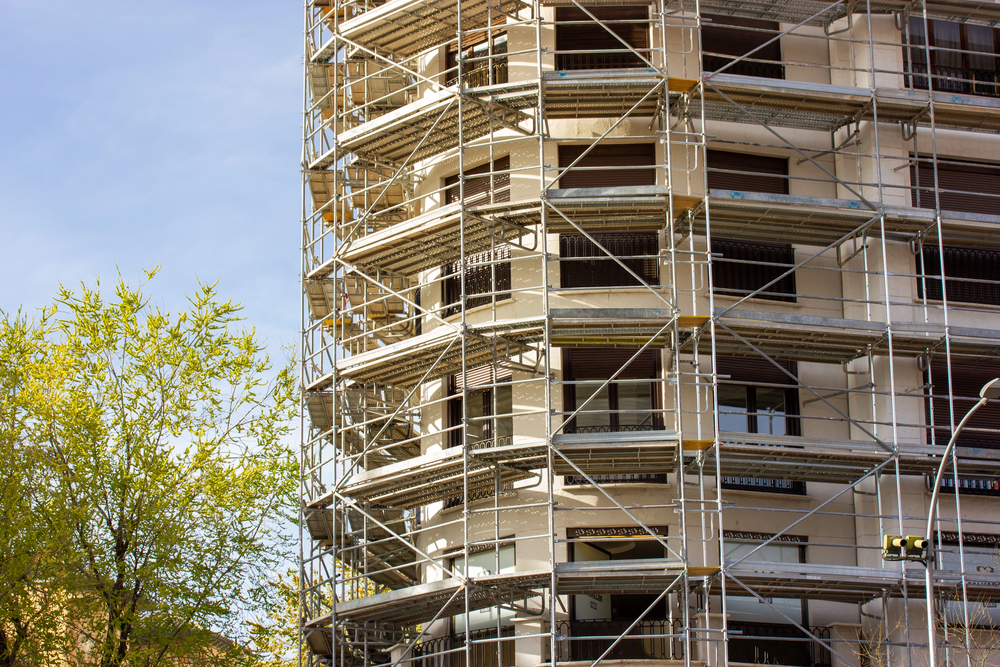
The general deadline for European funds to renovate buildings has already closed, but that doesn't mean public money to improve homeowners' associations has disappeared. If your community was waiting for the right moment to embark on an energy or accessibility renovation, it's advisable to update the map of Next Generation aid for communities and know which mechanisms are still active right now, both at the state level and in Catalonia, in addition to the tax deductions that do not depend on any call.
What Happened with the Next Generation Aid on June 30, 2026
Royal Decree 853/2021 set a very specific deadline for actions financed with European recovery funds. June 30, 2026, was the general deadline to complete the building renovation program funded by Next Generation funds: Royal Decree 853/2021 required that the actions be completed before that day. However, not all autonomous communities applied the same schedule: several autonomous communities published extensions between May and June 2026, so the real status of your file depends on where the building is located and the specific call it adhered to.
For communities that already had work underway, the closure does not mean losing the granted aid: the 60% for energy renovation of the building, the community route, admits amounts paid until December 31, 2027, which gives some leeway to justify already committed expenses.
The State's Successor: Housing Plan 2026-2030
For communities that didn't make it in time or want to start the process now, the Government has implemented a new regulatory framework. The State Housing Plan 2026-2030 (Royal Decree 326/2026) takes over from the Next Generation funds, endowed with 7,000 million euros and aid of up to 22,000 euros per dwelling to renovate buildings. It is the state framework for housing aid for the period 2026-2030, structured in three axes: more construction, more renovation, and more protection.
Within this plan, the line that most interests property managers and community presidents is the comprehensive renovation of residential buildings, generally aimed at buildings completed before 2006. If your property meets that age requirement, it's worth waiting for the regional call to develop this plan before ruling out a renovation due to lack of funding.
Catalonia: Extensions and Own Allocation by the Agència de l'Habitatge
In Catalonia, the management of renovation programs corresponds to the Agència de l'Habitatge de Catalunya, with a specific territorial distribution according to the municipality. Given the proximity of the general closure, the Generalitat de Catalunya has enabled an extension for programs 1 (neighborhoods) and 3 (buildings) of the Next Generation funds, and the extensions for program 1 and program 3 are already published in the DOGC.
The magnitude of the regional effort is significant: the Generalitat de Catalunya has an allocation of 480 million euros in subsidies that will allow action in 65,000 homes. An important nuance for those managing the process: it is essential that files with already completed actions provide the final energy efficiency certificate through the procedures portal before June 30, 2026, so it is advisable to check with the drafting technician that this documentation is ready in advance.
IRPF Deduction: The Aid That Doesn't Depend on Any Call
While direct subsidies have an expiration date and limited budget, the tax deduction in the IRPF for energy efficiency works continues to function independently of regional calls. The IRPF deduction for energy improvement remains active: until December 31, 2026, in its individual housing sections and until December 31, 2027, in the 60% section for buildings. This means that, even if your community has not obtained direct subsidy, the owners can deduct part of the expense incurred in the energy renovation of the building if the required energy savings requirements are met and the corresponding certificates are available before and after the action.
IBI and ICIO: The Municipal Discount That Almost No One Requests
There is a third savings route that often goes unnoticed because it does not depend on the State or the autonomous community, but on each city council. There is no state IBI discount: it is a decision of each city council, so the percentage and duration vary greatly depending on the municipality. A recent example illustrates the scope of these measures: the City Council of Mijas has approved a 50% discount on the Property Tax for homes that incorporate solar energy or aerothermal systems, a trend that is spreading to other municipalities as a way to reward investment in energy efficiency.
It is important to be clear about a management detail that makes the difference between saving or not: the discount is not applied automatically, it must be requested at the city council within the deadline set by the ordinance. The same applies to the ICIO, the tax that levies the work itself, which many councils discount when the action improves the building's energy rating.
How to Organize the Community in This New Landscape
With so many open routes and different deadlines, the key for a homeowners' association is to organize the process before starting:
- Check if the building meets the age and energy savings requirements of the Housing Plan 2026-2030 or the current regional call.
- Order the initial energy efficiency certificate as soon as possible, as it is the documentary basis for almost all aids and deductions.
- Consult the city council's fiscal ordinance to not miss the IBI or ICIO discount by not requesting it in time.
- Keep all invoices and payment receipts, essential both for subsidies and for the IRPF deduction.
Correctly combining these aids requires working with professionals who know the administrative and technical processing of each program. In the ForConnect professional directory, you can find specialists in renovation and energy efficiency with experience in this type of files. And if your community already knows the type of work it needs, you can request a quote to compare options and start planning the project with enough time before the deadlines change again.