Every 46 seconds, a water damage claim occurs in a home or community in Spain. It's just one statistic, but it clearly summarizes why preventing breakdowns in community installations has become an economic and insurance necessity rather than an option. Insurance companies have been recording the real impact of the lack of maintenance in plumbing, electricity, elevators, and air conditioning for years, and those numbers should be on the table of any homeowners' association meeting.
What Community Claims Reveal
Insurance sector reports quantify a problem that many administrators intuitively know. Water damage is the number one claim in community properties, occurring every 46 seconds in Spain, and accounted for 38.2% of home multi-risk insurance claims in 2024. Aggregately, the insurance sector handles 906,000 claims annually in community properties, making repairs worth 372 million euros.
More recent data confirm the magnitude of the phenomenon: community properties declared 1,509,779 claims in 2024, and insurers paid 682 million euros, with an average cost of 452 euros per claim. Although fires are much less frequent, their cost is disproportionate: the 8,213 community fires accounted for 13.9% of the money paid, with an average of 11,550 euros each. In Catalonia, the phenomenon is particularly significant, as it is the second region in the number of claims, with nearly 166,000 annually.
Why Insurance Is Not a Substitute for Preventive Maintenance
Many homeowners' associations assume that, no matter what happens, the community's insurance will cover the repair. The fine print of the policies says otherwise: insurance does not cover the contents of each home or damage due to lack of maintenance. This means that if a breakdown occurs because an installation hasn't been checked for years, the insurer may reject or limit the compensation, leaving the entire cost to the community.
According to industry experts, water is the source of 60% of claims in communities and one of the largest sources of unexpected expenses, making plumbing the community installation that requires the most preventive vigilance. Additionally, the speed of response to events like elevator breakdowns, water pump failures, or automatic door closures has become a determining factor for many communities when evaluating their maintenance and insurance contracts.
The Shift to Predictive Maintenance
The way preventive maintenance is done in communities is changing. Alongside classic periodic inspections, more and more properties are incorporating sensors and digital tools that allow them to anticipate failures before they occur. Predictive maintenance uses sensors, analysis tools, and remote monitoring to know the real state of installations, so it's not about routine checks but intervening when the data suggests it.
Some examples already applicable to residential buildings include elevators equipped with vibration sensors that detect anomalies before a breakdown occurs, smart meters that identify abnormal water consumption that could indicate a leak, and electrical monitoring systems capable of recording voltage spikes and anticipating possible failures. In community plumbing, solutions like water pressure sensors, leak detectors, or automatic chlorinators allow detecting a problem weeks before it leads to a serious breakdown or unexpected expense.
This model shift is not only technological but also starting to have commercial traction: some insurers might offer discounts to communities that adopt predictive maintenance systems, reducing their claim rates. Another argument for communities that still operate reactively to consider making the shift.
What Your Community Can Do Beyond Reacting to Breakdowns
Not all communities need to install sensors immediately, but they can adopt a series of habits that significantly reduce the risk of claims:
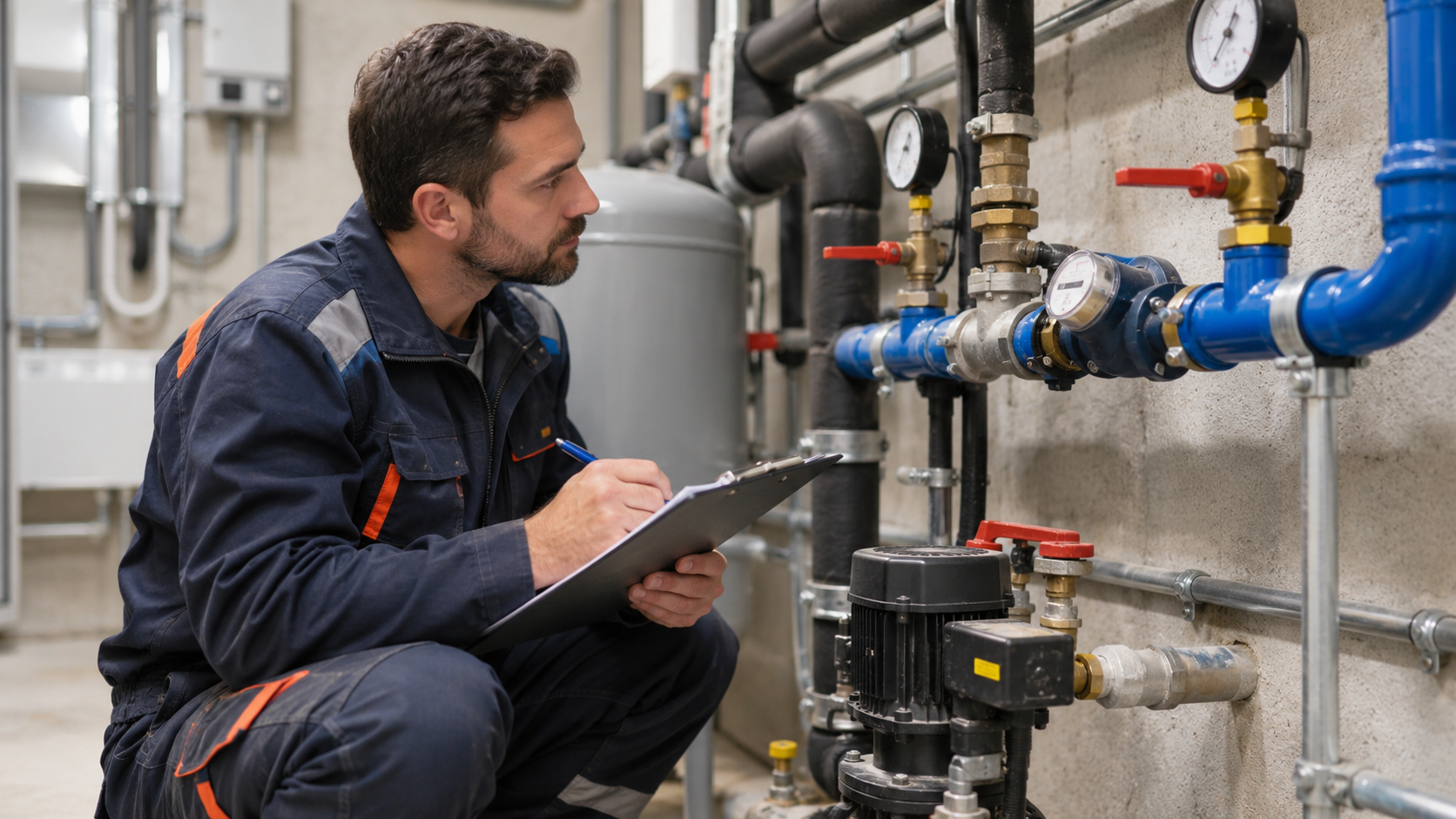
- Regularly inspect community plumbing installations (pipes, manholes, downspouts, and pressure groups), as water accounts for most claims.
- Maintain a documented record of each inspection and intervention, useful for both internal management and arguing with the insurer in case of a claim.
- Do not wait for equipment to fail to replace it: boilers, electrical panels, or elevator machinery have a useful life that should be monitored.
- Compare the cost of a preventive maintenance contract with the average claim cost in the sector, which is around hundreds of euros per incident and can skyrocket in severe cases.
- Have trusted professionals for each specialty, so inspections are done at the appropriate frequency and not just when there's already a visible problem.
If your community hasn't covered all these inspections yet, the ForConnect professional directory allows you to find trusted plumbers, electricians, and HVAC technicians specializing in properties and community associations.
Preventive Maintenance as an Investment, Not an Expense
Claim data sends a clear message: preventing breakdowns in community installations not only avoids surprises for residents but also protects insurance coverage and the community's annual budget. Every euro invested in inspecting plumbing, electrical panels, elevators, or air conditioning reduces the likelihood of facing an emergency repair, an extraordinary expense, or, in the worst case, a compensation that the insurer decides not to assume due to lack of accredited maintenance.
If your community wants to move from reaction to prevention, the first step is to have professionals who know the state of each installation well. From ForConnect, you can request a quote to inspect plumbing, electricity, air conditioning, or any other community installation, and take the first step towards preventive maintenance that, over time, is noticeable both in the peace of mind of the residents and in the community's account.