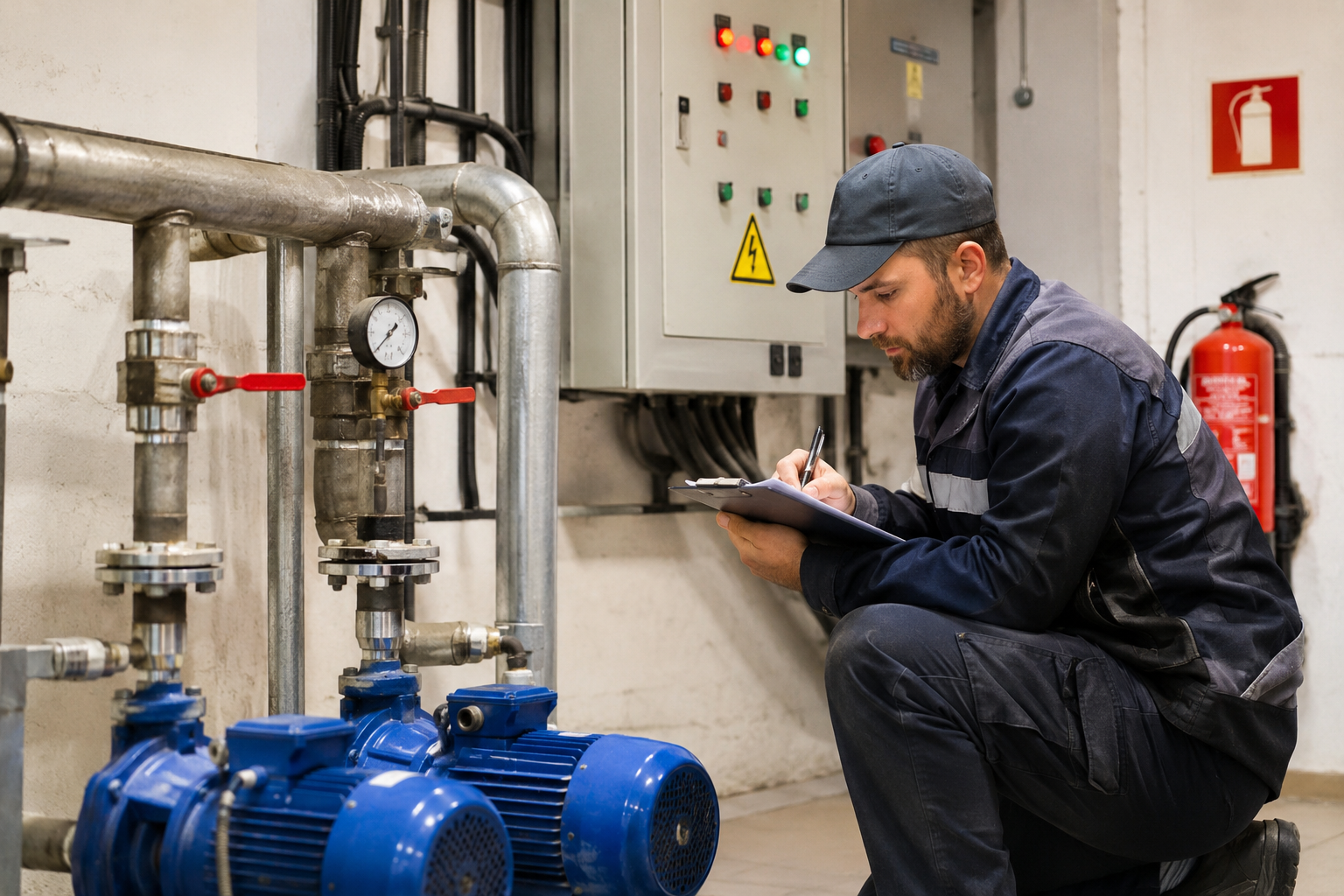
Preventive maintenance for communities is often perceived as just another expense in the annual budget, but the reality is quite the opposite: it is the most effective tool to prevent a small anomaly from becoming a serious, urgent, and much more expensive breakdown. When a homeowners' association decides to review installations only when something stops working, the economic cost, legal risk, and inconvenience for residents increase significantly.
How much does a breakdown really cost without preventive maintenance?
Industry data provides a fairly clear idea of the difference between acting before or after. An electrical panel without maintenance can cause a failure that leaves the entire building without power, and emergency repairs can cost between €500 and €3,000. In the case of water pressure groups, replacing a failed pump urgently can cost between €800 and €2,500, depending on the model and urgency. And if the breakdown coincides with the hottest months, the additional cost skyrockets even more: an HVAC system that fails in the middle of summer causes significant discomfort, and emergency repairs have surcharges of 20 to 40% over the normal price.
Against these figures, investing in regular inspections is almost always profitable. Investing in preventive maintenance can result in savings of up to 30-40% in long-term repair costs, and according to references from the maintenance industry itself, a well-implemented preventive plan can generate between 12% and 18% savings compared to the purely reactive model. Additionally, buildings with a well-structured preventive plan reduce urgent events by 60% in just six months, which translates into fewer emergency calls, fewer unexpected assessments, and much calmer management for the property manager.
Plumbing, electricity, elevators, and HVAC: the systems that generate the most breakdowns
Not all community installations have the same risk or economic impact if they fail. These are the points where prevention makes the most difference:
- Plumbing and pressure groups: leaks, corrosion in old pipes, and water pumps are one of the most frequent causes of water damage in communities, with emergency repairs skyrocketing if there are no regular inspections.
- Electricity: the main electrical panel is a critical element; a failure not detected in time can leave the entire building without supply and also imply liability for the community.
- Elevators: in addition to the mandatory inspection by the maintenance company, closely monitoring the equipment's condition prevents prolonged stoppages that directly affect residents' mobility.
- HVAC in common areas: parking lots, social rooms, or technical rooms suffer accelerated wear when not inspected before summer, the time of highest demand and highest cost if they fail.
In all cases, the logic is the same: a regular inspection of roofs, downspouts, pressure groups, electrical systems, or common areas allows detecting wear, accumulated dirt, misalignments, or minor anomalies before they become major repairs.
The impact of preventive maintenance on insurance and legal liability
Beyond the direct cost of repair, neglecting the maintenance of plumbing, electrical, or HVAC installations has other consequences that are often overlooked. On one hand, there is the legal issue: if the failure causes damage to people or property, the community may be held liable for negligence in maintenance. On the other hand, the incident history directly influences the cost of community insurance, as insurers consider, among other factors, the age of the pipes and the incident history when calculating the annual premium. A community with few breakdowns and a documented inspection plan generally has better conditions when renewing or contracting its policy.
How to transition from "firefighting" to real preventive maintenance
For the prevention of breakdowns in community installations to truly work, a one-time inspection after a scare is not enough. Some practical keys:
- Centralize the technical history: knowing what has been inspected, when, and with what result allows anticipating problems instead of reacting to them.
- Prioritize critical installations: main electrical panel, pressure group, elevator, and HVAC in common areas should have scheduled, not just corrective, inspections.
- Document each intervention: besides being useful for the community, an organized history facilitates the relationship with the insurer in case of an incident.
- Work with trusted and verified professionals: having reliable trades for each specialty avoids delays and additional costs when a real incident arises.
At ForConnect, we help property managers and communities find, in a single directory of professionals, the specialists in plumbing, electricity, HVAC, and other necessary installations to plan preventive inspections without relying on a single provider or last-minute calls.
Prevention always pays off
The numbers are clear: an emergency breakdown in plumbing, electricity, elevators, or HVAC costs, on average, several times more than the inspection that could have prevented it. In addition to economic savings, preventive maintenance for communities reduces legal risk, improves insurance conditions, and prevents residents from experiencing supply cuts or breakdowns at the worst times of the year.
If your community still manages maintenance reactively, it's a good time to take the step. Request a quote from verified professionals and start building a real preventive maintenance plan for your building.