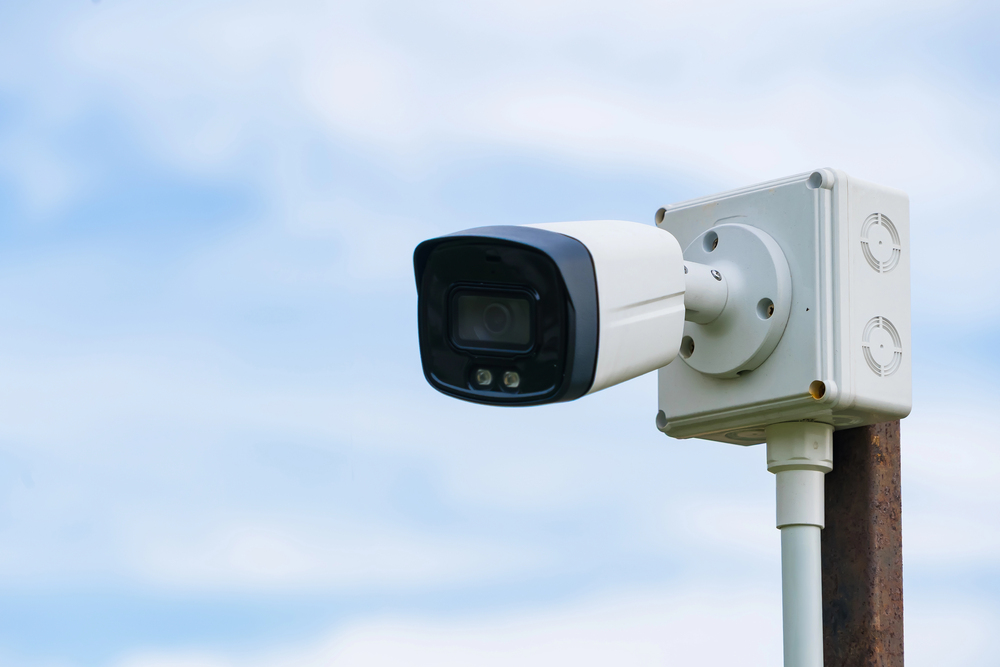
More and more residential communities are installing cameras, connected intercoms, and home automation systems to enhance building security. But before starting any project, it's important to understand the video surveillance in residential communities regulations that govern what can be recorded, who can access the images, and how long they must be retained. In this article, we review the current legal framework and how to combine it with smart intercoms, fiber optics, and home automation to make the community a safer and more connected space.
Is it legal to install cameras in a residential community?
The answer is yes, as long as certain conditions are met. To be legal, the installation must be approved at a homeowners' meeting, there must be a legitimate purpose such as security or access control, and data protection regulations must be complied with. Additionally, installing cameras in common areas requires the agreement of the Homeowners' Association, recorded in the minutes, and the same applies to cameras covering a community pool.
The main regulatory framework is supported by several rules that should be known: the Horizontal Property Law regulates the quorum and procedure for approving the installation in the Homeowners' Association, the Organic Law on Data Protection and the GDPR determine the obligations regarding data protection and the rights of those affected, and the Private Security Law 5/2014 establishes which companies can install and maintain the systems. In fact, only security companies approved by the Ministry of the Interior, through the General Directorate of the Police, can carry out the installation, maintenance, and management of video surveillance systems.
Limits and requirements you cannot overlook
Not everything is allowed when positioning a camera. Cameras installed in common areas cannot capture public roads or the facades or accesses of neighboring homes or properties, although the rule allows capturing only a minimal and essential strip of the sidewalk or street when it is technically impossible to avoid it. Nor can the interior of homes be recorded: no camera subject to this article can capture the interior of a private home.
Other key points that any community administrator or president should monitor:
- Visible information: it is mandatory to place informational signs at monitored accesses, indicating the data controller and purpose.
- Restricted access to recordings: only the community president, the authorized administrator, and security forces can view images, never the entire community freely.
- Retention period: as a general rule, images must be retained for a maximum of one month, in accordance with Article 22 of the LOPDGDD, unless they need to be retained to prove acts that threaten the integrity of people, property, or facilities, or when they must be made available to the competent authority.
- Transfer to security forces: it is contemplated in specific cases within the same Article 22 of the LOPDGDD.
Non-compliance is not a minor risk: it can lead to sanctions from the AEPD exceeding 10,000 euros, in addition to avoidable neighborhood conflicts. Therefore, documenting the agreement well and having an approved installer is as important as choosing the right equipment.
Smart intercoms: the first step towards a connected community
Beyond cameras, the intercom is today one of the most common entry points to building digitization. IP video intercoms operate over the building's data network, offer HD video, remote access from mobile devices, and integration with home automation platforms, and if the community has a garage, this system can be directly integrated with vehicle access control.
Not all communities need the same thing. The choice depends on the size and existing installation:
- Small buildings with old installations: in renovations with a 2-wire installation, a hybrid system allows app-based opening without wiring work, which greatly reduces costs.
- Medium-sized communities: digital systems with a bus are suitable for communities of 20 to 100 homes that want a robust system without relying on WiFi connectivity.
- Towers and large buildings: IP systems are suitable for new buildings, communities that want remote management, and buildings with more than 100 homes that need scalability.
As for price, a community intercom ranges from 600 € for a basic audio system to 3,000 € for an IP system with video intercom and remote opening, although it is worth remembering that in communities with more than 10 homes, the highest cost is usually the wiring, and if new wiring is needed, the budget can easily exceed 2,000 €.
Fiber optics and home automation: the infrastructure that supports everything
IP video intercoms, network cameras, access sensors, or remote opening from mobile devices have one thing in common: they need a stable data network. Well-dimensioned fiber optics in common areas not only improves the connection of each home, but it is also the technical basis for any connected security system to function without interruptions or latency. The latest ranges of video intercoms on the market are already clearly betting on this integration: the convergence between video intercom, advanced security, and connected home is already one of the major bets of the main manufacturers in the sector.
For a community, this translates into very specific advantages: receiving visitor notifications on the mobile, opening the gate from anywhere, integrating cameras and alarms in a single app, or scheduling access for suppliers and maintenance personnel without the need to hand over physical keys.
How to approach the project in your community
Before you start renewing cameras, intercom, or network, it is advisable to follow a logical order:
- Evaluate the current state of the wiring and existing installation to know if it can be reused.
- Define the purpose of the system (security, access control, convenience) and bring it to the homeowners' meeting for formal approval.
- Request quotes from approved professionals who can guarantee regulatory compliance in data protection and private security.
- Prioritize scalable solutions that allow adding home automation modules later without having to redo the entire installation.
If your community is considering updating video surveillance, the intercom, or the fiber optic network, in the ForConnect professional directory you can find specialized installers in security and telecommunications for communities. And if you already know what you need, you can request a quote quickly and without obligation, comparing options adapted to the size and real needs of your building.