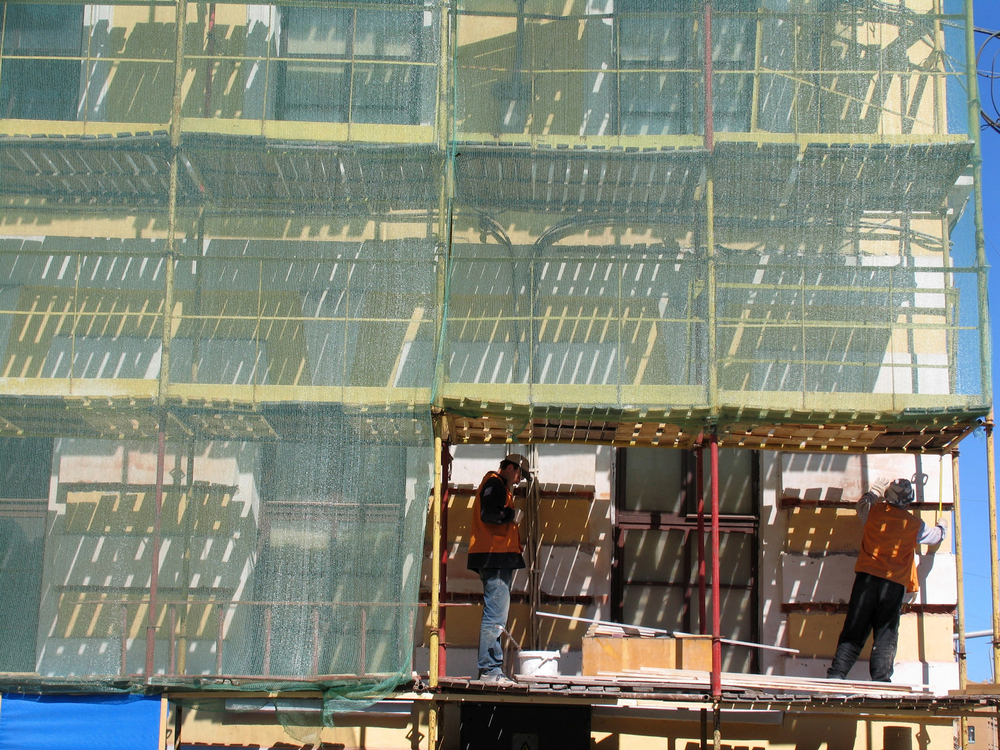
Comprehensive building rehabilitation is one of the most important decisions a homeowners' association can face. Deteriorated facades, humidity, structural deficiencies, or the need to improve energy efficiency can turn a minor intervention into a large-scale project.
For property managers and community presidents, the challenge is not only to find a company to execute the works. It is also necessary to identify the real needs of the building, establish priorities, coordinate professionals, and control the budget.
Well-planned rehabilitation allows the property to be preserved, improves safety and comfort conditions, and reduces the risk of having to repeat interventions in the future.
When is it necessary to comprehensively rehabilitate a building?
Not all buildings need comprehensive rehabilitation. In some cases, a localized repair is enough to solve a specific issue. In other situations, however, problems affect different construction elements, and a coordinated intervention is advisable.
Some signs that may indicate the need to consider rehabilitation are:
Cracks or fissures that may be related to structural problems.
Detachment or deterioration of facade coatings.
Recurring humidity in roofs, terraces, or walls.
Thermal insulation deficiencies affecting the comfort of the homes.
Aged or poorly maintained communal installations.
Deficiencies detected during the technical inspection of the building.
The presence of these symptoms does not necessarily mean that a complete rehabilitation is needed. It is essential for a competent professional to analyze the causes and determine the appropriate actions.
The importance of a technical diagnosis before starting
One of the most common mistakes in community works is starting to request quotes without having a clear definition of the necessary works.
For example, repairing a facade with humidity without identifying its origin can lead to the problem reappearing after the intervention.
Therefore, before starting rehabilitation, it is advisable to have a technical diagnosis that allows knowing the real state of the property.
What should a good diagnosis include?
The initial study should analyze the affected elements, identify possible causes of the pathologies, and establish which actions are necessary.
Depending on the characteristics of the building, it may be necessary to review the structure, facades, roofs, waterproofing systems, and other construction elements.
It is also important to determine which interventions are urgent for safety reasons and which can be scheduled in the medium term.
This information allows for the preparation of an appropriate project or technical documentation and the request for comparable quotes.
How to avoid cost overruns during community rehabilitation?
Cost overruns cannot always be completely eliminated, especially in old buildings where hidden pathologies may appear.
However, good preparation helps reduce their likelihood and better manage economic deviations.
1. Correctly define the scope of the works
The budget must specify the items to be executed, the planned materials, the measurements, and the working conditions.
A too generic description can lead to different interpretations among companies and make economic control difficult.
2. Compare equivalent quotes
It is not advisable to choose a company solely because it offers the lowest price.
It is necessary to verify that all proposals include the same works, necessary safety measures, waste management, and auxiliary means, such as scaffolding or elevated platforms.
It is also advisable to review the guarantees, exclusions, and payment conditions.
3. Establish a realistic schedule
Rehabilitation can be conditioned by weather, administrative deadlines, material supply, or technical difficulties that arise during execution.
Having a clear plan allows coordinating the different phases and informing neighbors when major impacts will occur.
4. Anticipate possible unforeseen events
In existing buildings, it is possible to discover deteriorations that were not visible during the initial inspection.
For this reason, it is prudent to assess a contingency fund proportional to the complexity of the work and establish a procedure to approve any budget modification.
5. Monitor the execution
Technical control of the works allows verifying that the works are carried out according to the project and detecting deviations before they become more significant problems.
The project management, when required, must perform its functions in accordance with the applicable regulations.
Facade rehabilitation: an intervention that goes beyond aesthetics
The facade is one of the elements most exposed to rain, wind, temperature changes, and urban pollution.
Over the years, these factors can cause cracks, detachment, degradation of coatings, and waterproofing problems.
Rehabilitating a facade does not necessarily mean limiting oneself to painting it or renewing its exterior finish.
Depending on the state of the building, it may be necessary to repair deteriorated elements, improve waterproofing, treat construction pathologies, or incorporate thermal insulation systems.
In Barcelona, where buildings of different eras and construction characteristics coexist, it is especially important to adapt each intervention to the reality of the property.
Energy rehabilitation: taking advantage of works to improve the building
When a community needs to intervene on a facade or roof, it is also a good time to study possible energy improvements.
Energy rehabilitation can include actions on the thermal envelope, reduction of thermal bridges, and improvement of the building's airtightness.
These measures can help reduce heating and cooling needs, provided they are correctly designed and executed.
However, the actual savings will depend on the construction characteristics, installations, usage habits, and climatic conditions.
Before incorporating an energy solution, it is advisable to study its technical feasibility, cost, and expected benefits.
What happens when the building has structural problems?
Structural pathologies require special attention because they can affect the safety and stability of the property.
Some visible manifestations, such as certain cracks, deformations, or concrete deterioration, may justify a specific technical inspection.
Not all cracks are structural, but they should not be treated solely as an aesthetic problem without determining their origin.
In these cases, a competent technician must assess the situation and define the necessary measures, which may include preventive actions, repairs, or structural reinforcements.
When there is an immediate risk, the safety of people must be prioritized, and the measures indicated by responsible professionals must be adopted.
The vision of Contracta: coordinating complex interventions
The rehabilitation of a building may involve different technical specialties that must work in a coordinated manner.
Contracta, a company based in Barcelona, develops projects for comprehensive rehabilitation, facade rehabilitation, structural pathology repair, and energy improvement of buildings.
According to the information published on their website, they have a team of technical architects and construction professionals, and they have over 30 years of experience in rehabilitation and renovations.
Their approach emphasizes planning, technical rigor, and coordination of the different phases of the works.
This specialization is relevant for communities that need to intervene in various elements of the building and want to approach the project with a comprehensive vision.
What should the community consider before approving the works?
Before making a final decision, it is important for owners to have sufficient information about the project.
The property manager can facilitate this process by gathering the technical documentation, organizing the quotes, and explaining the economic and administrative implications of the proposed actions.
It is also necessary to verify the applicable agreement regime, necessary municipal licenses or communications, possible conservation obligations, and the availability of financing.
In Catalonia, communities must consider the horizontal property regime of the Civil Code of Catalonia, as well as the technical and urban planning regulations corresponding to each intervention.
Regarding subsidies, it is important to consult the current official calls before including any aid in the budget. Not all works are subsidizable, nor do all communities meet the requirements.
Contracta and ForConnect: specialized professionals for rehabilitation
Having specialized professionals is essential when a community has to face rehabilitation works that require technical coordination, planning, and control.
Contracta is part of the network of collaborating professionals of ForConnect, a platform that connects property managers, homeowners' associations, and individuals with specialized companies.
Their activity in comprehensive rehabilitation, facades, and structural pathology repair allows them to respond to common needs of existing buildings.
If your community needs to rehabilitate a facade, repair structural elements, or study a comprehensive rehabilitation, at ForConnect you can find verified professionals and request advice or a quote to assess the necessary actions.